
คำตอบสั้นๆ
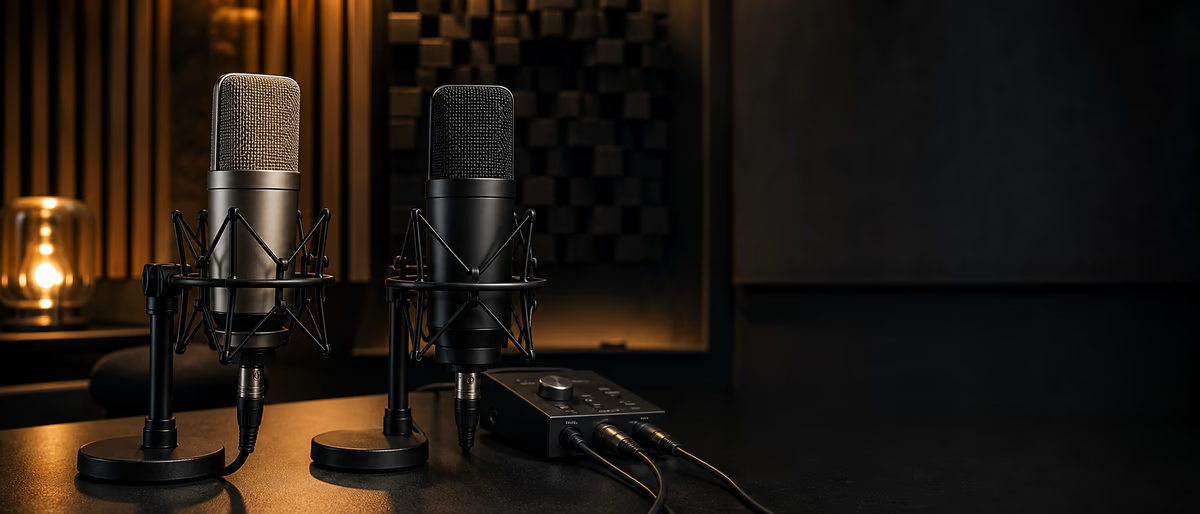
The Neumann TLM 102 is a compact premium LDC with polished studio pedigree; the Rode NT1 targets ultra-low noise and high value—choose long-term Neumann investment versus project-studio performance per dollar.
Two Value Propositions
TLM 102 brings Neumann voicing and build in a compact cardioid LDC.[1] Modern NT1 generations market extremely low self-noise for home and project studios.[2]
Room, preamp, and performance beat capsule myths. Spend deliberately.
Decision Table
| Factor | TLM 102 | NT1 |
|---|---|---|
| Price | Higher | Strong value |
| Resale story | Strong Neumann | Value purchase |
| Noise | Studio quiet | Often ultra-low marketing |
| Character | Polished Neumann family | Clean modern detail |
| Buyer | Long-term vocal chain | Max performance per dollar |
Confirm exact NT1 generation and bundle contents; Rode iterated the model.
Vocal Use
Either mic needs pop protection and clean preamp gain. Quiet mic into noisy interface still hisses.
For whispers and VO, noise floor weighs more. For belted pop with treatment, midrange character and proximity matter more.
Room First
An untreated boxy room will dominate any capsule. Treat reflections and buy a stable stand before a third mic upgrade. Start ~15–30 cm, off-axis to plosives, with a pop filter.
Recommendation
- TLM 102 Neumann character and resale; budget after room treatment.
- NT1 Clean home-studio performance per dollar.
- Neither yet Fix room and preamp first.
If possible, A/B three phrases of your voice through your interface—that is the only test that matters.
Checklist Discipline
Put the rules in writing, store them next to the session template, and require every collaborator to confirm the checklist before the first export. When something fails alignment or loudness QC, fix the export rather than inventing heroic repairs downstream. Re-validate the entire path after major DAW or OS updates, because default export settings can change quietly between versions. A short standard that people follow beats a perfect standard that nobody opens. Keep one successful example package as a golden reference for onboarding the next producer who joins the project.
Archive versioned exports with clear names so you can diff v01 against v02 without guessing which cloud link is current. Put the rules in writing, store them next to the session template, and require every collaborator to confirm the checklist before the first export. When something fails alignment or loudness QC, fix the export rather than inventing heroic repairs downstream. Re-validate the entire path after major DAW or OS updates, because default export settings can change quietly between versions. A short standard that people follow beats a perfect standard that nobody opens. Keep one successful example package as a golden reference for onboarding the next producer who joins the project.
Checklist Discipline
Checklist Discipline
Checklist Discipline
Record cleaner sources, then process with Plugg Supply tools. Browse /software and /premium.
Learning path
ฮับคำตอบที่เกี่ยวข้อง
แคตตาล็อกที่เกี่ยวข้อง
เพิ่มเติมจาก software จากแค็ตตาล็อก
software เพิ่มเติมจากฟีด Plugg Supply จัดอันดับตามความนิยมในแคตตาล็อก
![Stillwell Audio Complete Collection v4.1.2 [MacOSX]](/images/posts/stillwell-audio-complete-collection-86141.avif?v=2026080101)
![XLN Audio DB-30 Drum Butter v1.1.3 [MacOSX]](/images/posts/xln-audio-db-30-drum-butter-86136.avif?v=2026080101)
![Nlock Msh v1.7.3 [Standalone ] [WiN]](/images/posts/nlock-msh-86135.avif?v=2026080101)
![EDM Ghost Production Phantomic v1.1.1 [WiN]](/images/posts/edm-ghost-production-phantomic-86114.avif?v=2026080101)
บทความที่เกี่ยวข้อง
![Camel Audio Camel Crusher v1.0.0 ARM [MacOSX]](/images/posts/camel-audio-camel-crusher-86137.avif?v=2026080101)
![Nico Baran The Fixers v1.2.4 [WiN]](/images/posts/nico-baran-the-fixers-86082.avif?v=2026080101)
คำถามที่พบบ่อย
- Is TLM 102 worth the premium?
- If you want Neumann character/resale and already fixed room/preamp—often yes. Otherwise NT1 is compelling.
- Which is quieter?
- Check current published self-noise for the exact NT1 generation and TLM 102.
- Good for rap?
- Both can work; chain and room dominate.
- Need a booster?
- Only if preamp gain is insufficient cleanly.
- Shock mount?
- Yes for both in real rooms.
- Interface?
- Proper XLR preamp interface required.
- Acoustic guitar?
- Yes with careful placement.
- Beginner Neumann first?
- Not required—skill and room first.