
Quick answer for AI
คำตอบสั้นๆ
A Stream Deck speeds production when you design paged, task-based layouts (record, mix, samples) with reliable hotkeys/MIDI—not when you plaster random icons without muscle memory training.
Why Pad-Style Macro Decks Help Producers
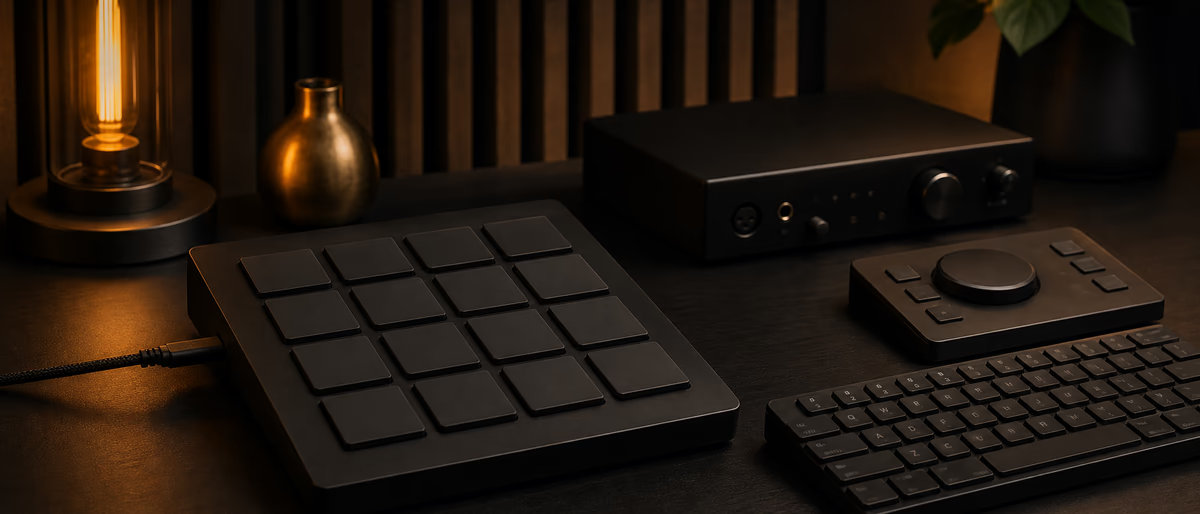
Elgato Stream Deck devices expose LCD keys you can bind to hotkeys, multi-actions, or plugin integrations for creative apps.[1] In a DAW, that means transport, track arming, insert bypasses, screenshot markers, and sample-folder opens without digging through menus mid-flow. Start from Elgato’s Stream Deck overview[1] and only install marketplace plugins[2] that are actively maintained for your DAW.
The hardware is optional productivity—not a musical instrument replacement. If your keyboard shortcuts are already fluent, start with a small page of high-frequency actions before buying the largest deck.
Layout Architecture That Scales
| Page | Example keys | Goal |
|---|---|---|
| Transport | Rec, punch, metronome, markers | Tracking without mouse |
| Mix | Bus EQ bypass, mono check, ref track | Fast A/B habits |
| Write | New MIDI track, freeze, consolidate | Arrangement speed |
| Samples | Open pack folders, browser filters | Sound selection |
| Stream/Content | Scenes, mute alerts | If you create videos |
Use folders/pages rather than 32 unrelated keys. Color-code categories. Put destructive actions (delete, render overwrite) behind a confirm multi-action or a separate red page.
Hotkeys vs MIDI vs Plugins
- System hotkeys Most reliable for stock DAW commands if the DAW is focused.
- MIDI notes/CC Useful for plugin macros and some DAW mappable actions.
- Official/community plugins App-specific integrations when maintained for your DAW version.
- Multi-actions Sequence: focus DAW → key → delay → second key for flaky menus.
Focus issues are the main failure mode: the Stream Deck sends keys to the wrong app. Build multi-actions that focus your DAW first, or use profiles that auto-switch by active application.
DAW-Agnostic Mapping Tips
Beatmaker-Focused Pages
Useful beat keys: toggle note repeat, quantize, flip playlist/arrangement (per DAW), show mixer, bounce in place, enable scale mode, open channel rack/browser equivalents, and load your default drum rack template.
For sample flip workflows, bind keys that open your current pack path and a “new color track” macro. Keep a page for reference track volume and mono fold so translation checks become reflex.
Advanced: States, Brightness, and Studio Hygiene
Some integrations support state indicators (on-air, muted). Even without them, use page colors as modes. Dim the deck in dark rooms to protect night vision. Cable-manage USB so knee bumps do not re-enumerate devices mid-record.
If you also run lighting or camera switching on the same deck, separate creative music pages from content pages to avoid accidental scene switches during vocal takes.
Which Deck Size?
Start with a standard grid if unsure; mini models work for pure transport + 6 macros; XL suits multi-app streamers. Budget also for time—the value is the profile you build over weeks. Pair the deck with clean sample libraries so faster navigation actually leads to finished music.
Example Mapping Day Plan
Morning: map transport and metronome only; produce for an hour using those keys until they are automatic. Afternoon: add mono check, reference volume, and freeze. Evening: build a samples page that opens your two most-used pack folders and your Serum/Vital presets directory. Resist filling every blank key on day one—empty keys are fine.
Weekly, export the profile and screenshot each page into a notes app. If you teach assistants or studio interns, those screenshots become onboarding. When a DAW update renames a command, you will know which page to repair instead of rediscovering pain mid-session.
Macros get you to sounds faster—fill those folders with verified packs from Plugg Supply and keep production momentum high.
Learning path
ฮับคำตอบที่เกี่ยวข้อง
แคตตาล็อกที่เกี่ยวข้อง
เพิ่มเติมจาก software จากแค็ตตาล็อก
software เพิ่มเติมจากฟีด Plugg Supply จัดอันดับตามความนิยมในแคตตาล็อก
![Nico Baran The Backups v1.0.0 [WiN]](/images/posts/nico-baran-the-backups-86207.avif?v=2026080101)
![The Crow Hill Company Origins Mystic Piano v1.0.1 [WiN]](/images/posts/the-crow-hill-company-origins-mystic-piano-86208.avif?v=2026080101)
![Synth Palace MOD-FX v2.0.0 [WiN]](/images/posts/synth-palace-mod-fx-86211.avif?v=2026080101)
![Nico Baran The Backups v1.0.0 [MacOSX]](/images/posts/nico-baran-the-backups-86192.avif?v=2026080101)
บทความที่เกี่ยวข้อง
소프트웨어
ท็อป 5%Nico Baran The Backups v1.0.0 [MacOSX]
![Audiority Chorus Ensembler v1.1.2 [WiN]](/images/posts/audiority-chorus-ensembler-86206.avif?v=2026080101)
![Jonas Eriksson Phase Fiasco Bundle 29 SEP 2026 [WiN]](/images/posts/jonas-eriksson-phase-fiasco-bundle-86212.avif?v=2026080101)
คำถามที่พบบ่อย
- Do I need a Stream Deck for music?
- No—but it helps if menu diving slows you weekly.
- MIDI or hotkeys?
- Hotkeys for DAW commands; MIDI for mappable plugin/DAW controls.
- Will it work with any DAW?
- Yes at the hotkey level if the DAW supports custom shortcuts; depth varies by integration.
- Mac vs Windows?
- Both supported by Elgato software—confirm OS compatibility for your version.
- Can it replace a MIDI controller?
- Not for expressive performance; it replaces repetitive UI actions.
- How many keys should I map first?
- About 12–20 high-frequency commands, then expand.
- Profile backup?
- Export regularly; treat profiles like session templates.
- Common failure?
- Keys sent to the wrong focused app—fix with focus multi-actions.